




Efficient Wiring Solutions: A Guide to PCT & SPL Lever Nut Connectors
Professional Wire Management: The PCT & SPL Lever Nut Advantage
In the world of modern electronics and electrical maintenance, the days of struggling with messy electrical tape and unreliable twist-on wire nuts are fading. For professionals and DIY enthusiasts alike, Lever Nut Splice Connectors have become the gold standard for creating secure, reusable, and highly organized connections.
At CyberConnect, we prioritize components that balance reliability with ease of use. The PCT series—specifically the PCT-212, PCT-213, and PCT-215—represents a significant leap forward in terminal block technology.
What are PCT Series Connectors?
The PCT series consists of compact, transparent splice connectors that utilize a lever-actuated spring clamp mechanism. Unlike traditional screw terminals, these require no tools for installation, making them ideal for tight spaces and quick prototyping.
The Core Lineup:
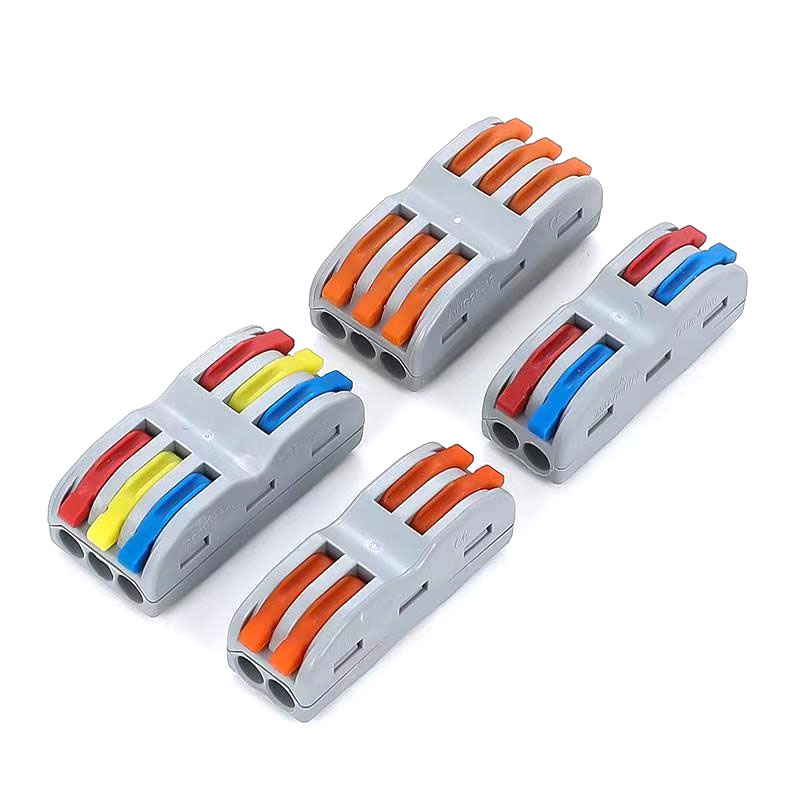
PCT-212: A 2-port connector, perfect for simple extensions or joining two wires.
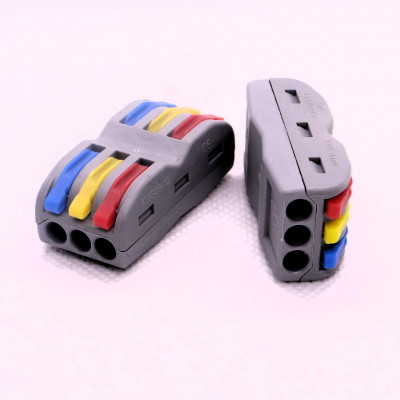
PCT-213: A 3-port connector, commonly used for splitting a power line into two directions.
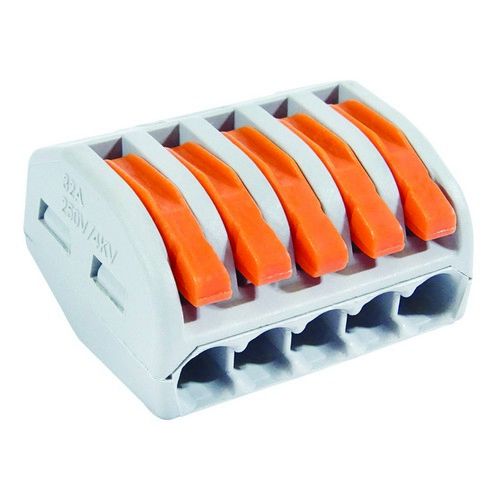
PCT-215: A 5-port connector, designed for complex junctions where multiple leads must share a common connection.
Key Features and Benefits
1. Tool-Free Operation
The standout feature is the orange lever. Simply lift the lever, insert the stripped wire, and snap the lever down. The internal spring pressure ensures a gas-tight connection that resists vibration and thermal expansion better than screw-based alternatives.
2. Universal Compatibility
These connectors are incredibly versatile. They can handle:
Solid Wires: 0.08 mm2 to 2.5 mm2 (or up to 4.0 mm2 for some variants).
Stranded/Flexible Wires: Perfect for the flexible cables often found in networking and smart home sensors.
3. Safety and Inspection
The housings are made from high-quality, flame-retardant insulating material (PA66). Because the shells are transparent, you can visually verify that the wire is stripped to the correct length and fully seated within the clamp.
4. Reusability
Unlike crimp connectors, PCT blocks are non-destructive. If you need to change a circuit or replace a component, you simply flip the lever and remove the wire. This makes them indispensable for testing environments and modular builds.
Technical Specifications at a Glance
Common Use Cases
Smart Home Integration: Wiring sensors, relays, and controllers where space is at a premium.
Lighting Installations: Connecting LED downlights or chandeliers where overhead work makes screwdrivers cumbersome.
Junction Boxes: Tidying up crowded enclosures by replacing bulky terminal strips.
Prototyping: Quickly swapping out components in power distribution projects without soldering.
How to Install
Strip: Use a wire stripper to remove approximately 10mm of insulation from your conductor.
Open: Lift the orange lever to a 90° angle.
Insert: Push the stripped wire into the port until it hits the backstop.
Secure: Push the lever back down until it is flush with the housing.
Secure Your Connections Today
Whether you are scaling a professional infrastructure project or finishing a custom electronics build, the PCT-212, 213, and 215 terminal blocks provide the security your work deserves.
|
Splice Connector |
PCT-215 - 5 way connector , SPL - 2 way connector , SPL - 3 way connector |
|
Colour |
Orange , Yellow , Blue , Single Colour , TriColour , Double Colour |