
Bridging Systems: The FT232RL USB-to-TTL Serial Adapter
Enabling Communication Between PCs and Embedded Hardware
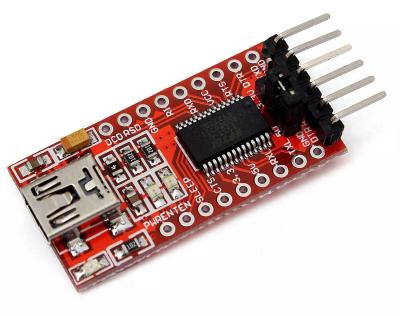
The FT232RL FTDI USB-to-TTL Serial Converter is an indispensable tool for bridging the gap between a modern computer’s USB port and the serial UART (Universal Asynchronous Receiver-Transmitter) interface found on microcontrollers like the STM8S105K4T6 or ESP32. Acting as a virtual COM port, this module translates USB data packets into the electrical signals required for serial communication, enabling tasks such as firmware flashing, debugging console logs, and real-time data monitoring. By supporting selectable voltage levels—typically 3.3V or 5V—the FT232RL ensures safe compatibility with a wide range of logic levels, making it the primary interface for "headless" hardware development where direct USB-to-device connectivity is absent.
To achieve a reliable connection, one must observe the fundamental rules of serial communication: connecting the TX (transmit) pin of the adapter to the RX (receive) pin of the target device, and vice versa. It is also critical to share a common ground (GND) between the adapter and the development board to ensure a stable reference voltage for logic signal interpretation. While the FT232RL is highly plug-and-play on most modern operating systems, always ensure you have the correct virtual COM port drivers installed. For stable data transmission, especially when flashing firmware, keep your jumper wires short and avoid excessive cable lengths, as signal degradation can lead to checksum errors or interrupted data transfers during critical write operations.