



Mastering the STM8S105K4T6 Development Board
Prototyping with the STM8 8-Bit Architecture
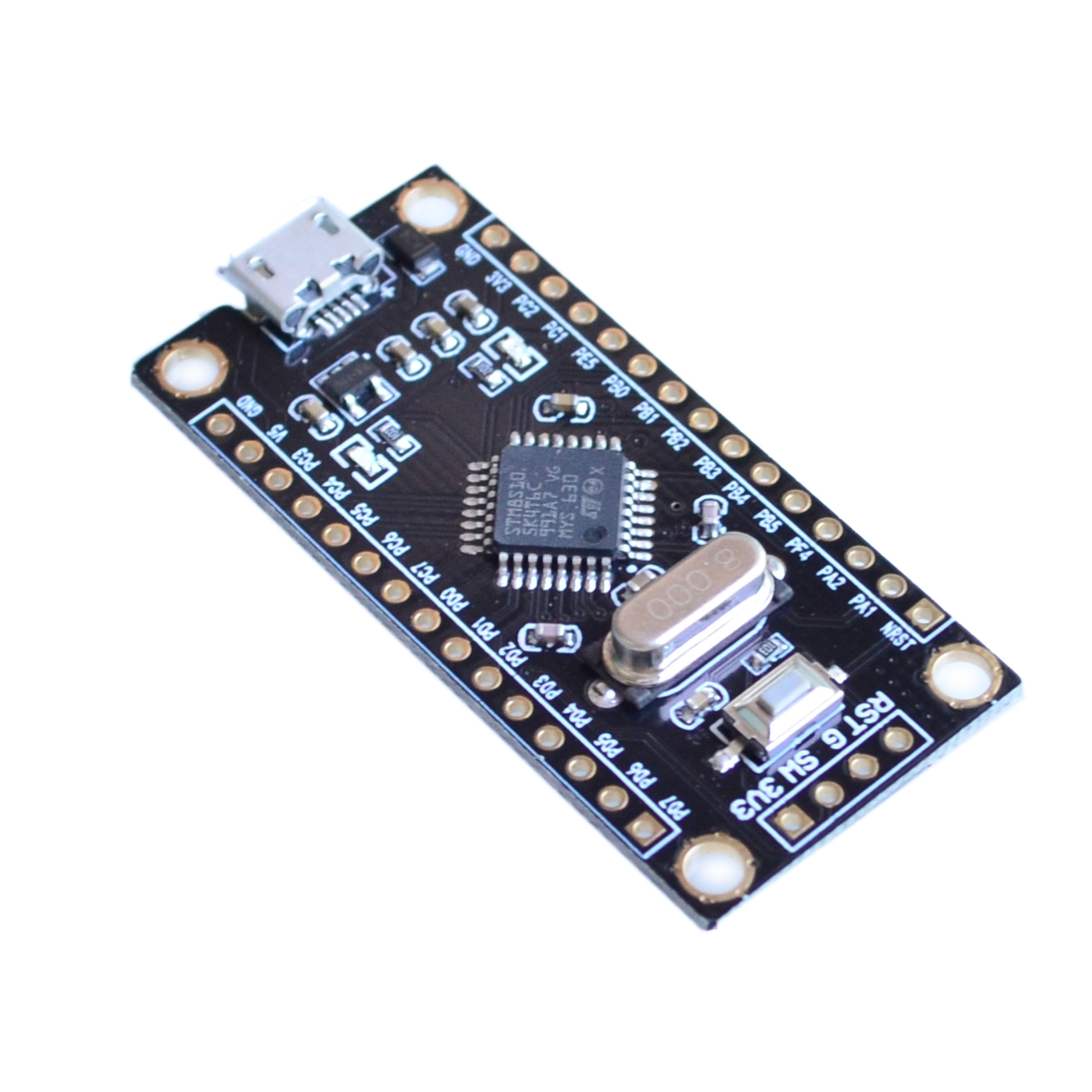
The STM8S105K4T6 development board is a compact, cost-effective "minimum system" platform built around STMicroelectronics' versatile 8-bit microcontroller. Featuring 16KB of Flash memory, 2KB of RAM, and a robust set of integrated peripherals—including multiple timers, UART, SPI, and I²C interfaces—this board is an excellent choice for low-power embedded applications and control-logic projects. The board typically breaks out the microcontroller’s I/O pins to standard 2.54mm headers, allowing for rapid breadboard prototyping. By leveraging its efficient architecture, developers can implement high-performance interrupt-driven tasks, making it a reliable workhorse for sensor integration, motor control, and small-scale automation systems that require a smaller footprint than more resource-heavy alternatives like the ESP32 or STM32 lines.
Developing for the STM8S105K4T6 requires a dedicated workflow centered around the Single Wire Interface Module (SWIM). To program the chip, you must interface it with an ST-Link V2 programmer, which handles both flashing and real-time debugging. While the official ST Visual Develop (STVD) suite is the standard for Windows-based development, many modern projects utilize the open-source SDCC (Small Device C Compiler) to maintain a lightweight, cross-platform toolchain. When integrating this board into a larger system, ensure stable power delivery via the onboard 3.3V regulator and pay close attention to the specific electrical characteristics defined in the official datasheet to prevent damage to the chip's sensitive I/O ports during high-frequency switching or peripheral interaction.